

Designing for Storage and Longevity in a 1968 Home
When the Gruber family of Chattanooga, Tennessee, began thinking about their kitchen and bar, they weren’t chasing a dramatic transformation or a magazine moment. Their motivation was quieter—and more urgent. Their home, built in 1968, simply wasn’t designed for a modern family of five. Storage was limited, pantry space was nearly nonexistent, and what storage did exist wasn’t secure enough for a household with three young boys, including a curious one‑year‑old.
Yet solving the storage problem couldn’t come at the expense of how the space felt. The Grubers wanted a kitchen and bar that worked hard behind the scenes while still feeling open, clean, and composed. No overcrowding. Just a space that supported daily family life without ever feeling chaotic.
Why IKEA Felt Right—But the Design Didn’t
The Grubers already trusted IKEA kitchen cabinetry. Years earlier, close friends had installed an IKEA kitchen—one that was now more than a decade old and still functioning beautifully. That experience left a strong impression. They appreciated IKEA’s Scandinavian sensibility, the durability of the cabinets, and the value: quality construction without the cost of custom cabinetry.
What they didn’t trust was their ability to design the kitchen themselves.
Like many homeowners, they experimented with IKEA’s Home Planner early on. It was useful for building rough layouts and understanding budgets, but the results never felt resolved. The designs worked numerically, but not visually. As Sue Gruber later reflected, neither she nor her husband felt particularly creative when it came to turning boxes on a screen into a space that felt intentional and balanced.
During an online search for IKEA kitchen ideas, Bill Gruber came across IKD. The website and its helpful articles stood out—not because they promised something extravagant, but because they demonstrated something specific: how IKEA systems could be carefully customized, thoughtfully configured, and adapted to real homes and real families.
Two motivations quickly became clear:
First, they wanted a kitchen and bar that looked cohesive and well considered—not pieced together.
Second, they wanted access to professional product knowledge and customization strategies—the kinds of space‑maximizing decisions and subtle “hacks” they knew they wouldn’t arrive at on their own.
A few IKEA cabinet hacks making the kitchen flow much better
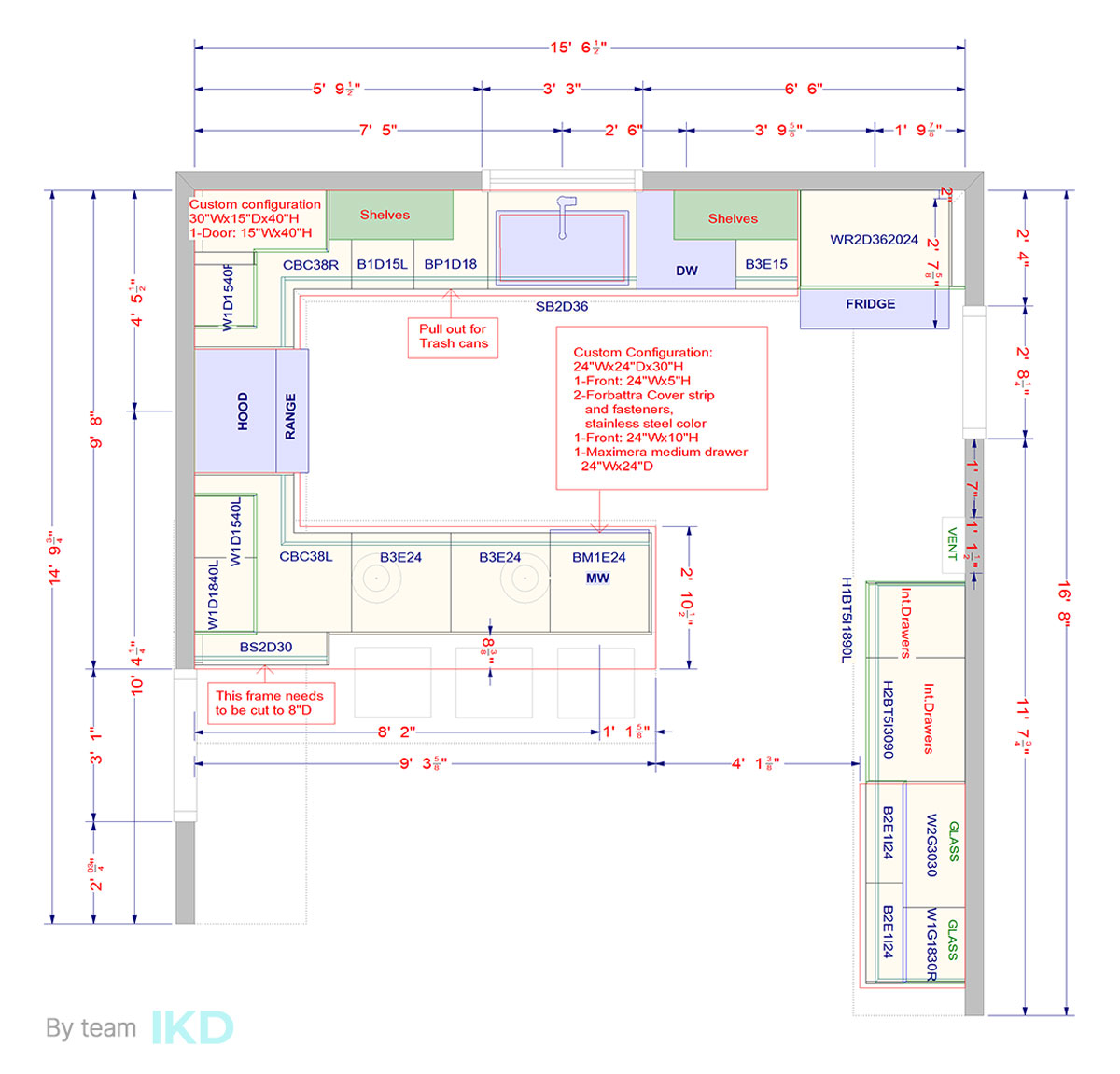
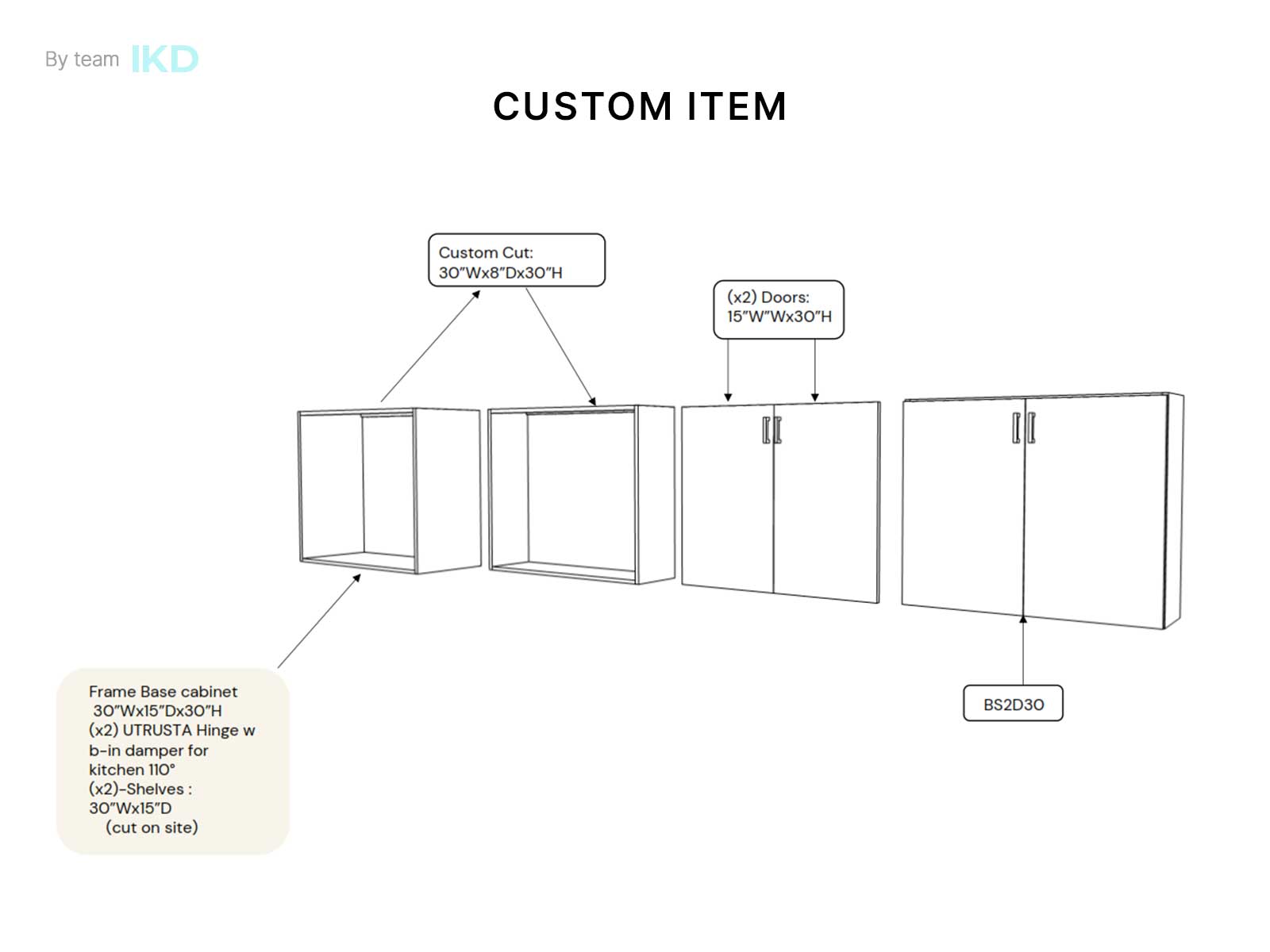
IKEA’s standard wall cabinet wasn’t working at the corner to the left of the window. We reduced the cabinet sizing and designed a smaller door. A small base utility cabinet was designed at the back of the peninsula by reducing a 12” deep wall cabinet to 8” deep. We hacked several IKEA components to build a 24” base cabinet ready for a 24” undercounter microwave.
A Kitchen & Bar Designed for Daily Life
“We wanted something that worked for our family day-to-day, but still felt open, clean, and intentional.”
Working with IKD designer Meyer, the project focused on two connected spaces: the Kitchen and the Bar. From the outset, the design centered on practical family needs—secure storage, durability, and ease of use—while preserving a sense of openness throughout the home.
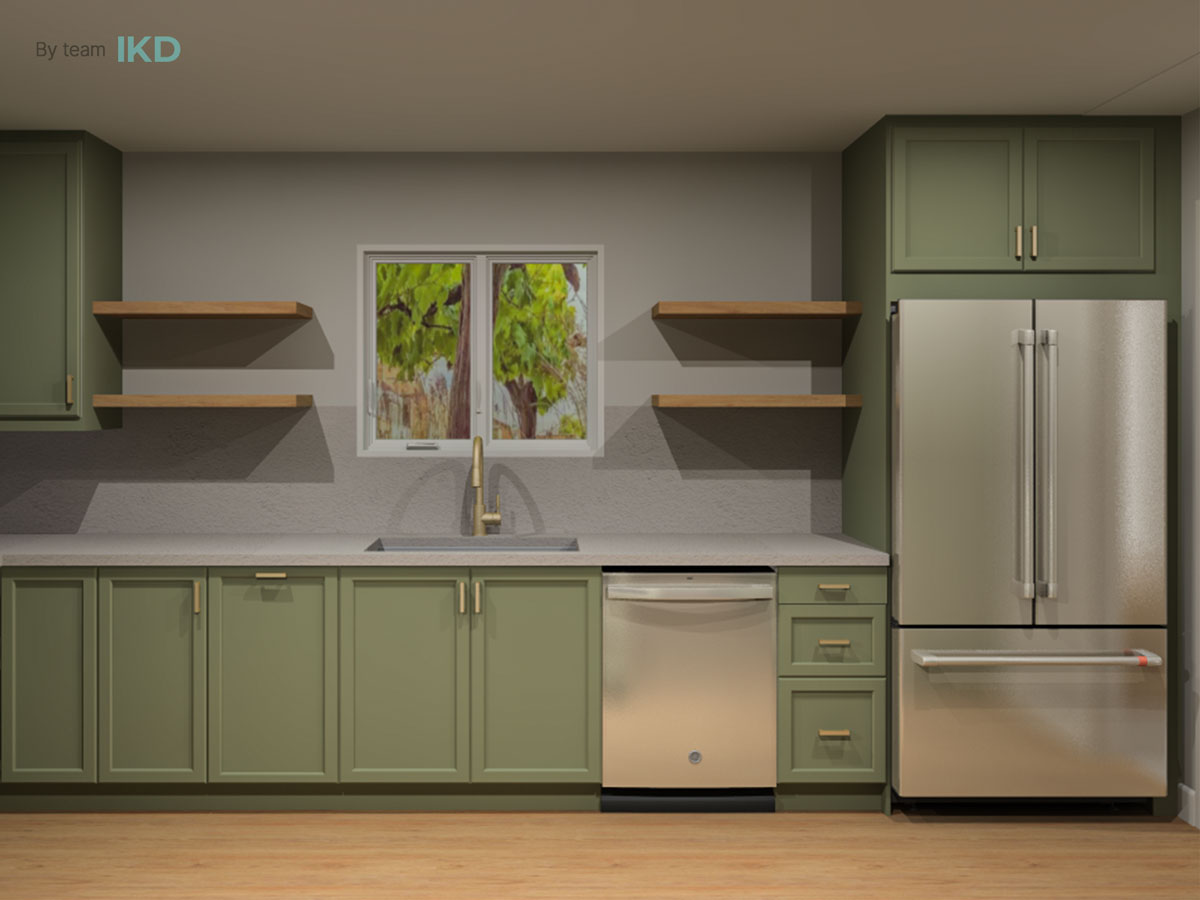
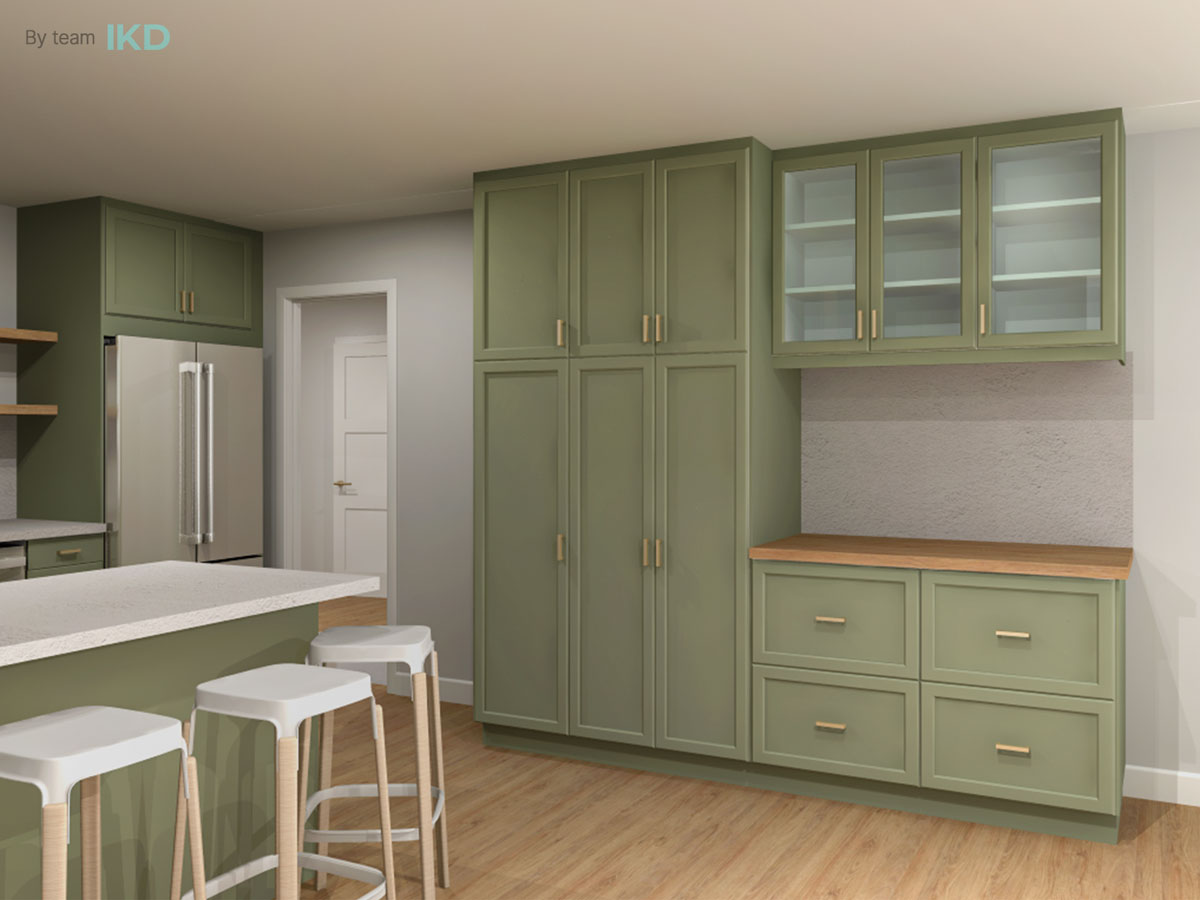
One of the defining design choices was IKEA’s Axstad grey-green kitchen cabinetry and Bagganas brass handles. In a home built in the late 1960s, they felt both appropriate and timeless—grounded enough to complement the architecture, yet fresh enough to feel current.
A Process Built on Clarity and Flexibility
Equally important to the final design was how the process unfolded. Communication with IKD was clear, responsive, and consistent throughout. Questions were answered quickly. Adjustments were explained thoroughly. Nothing felt rushed or unclear.
A major advantage of working with IKD was the ability to phase the project. While the kitchen and bar were designed as a single, cohesive plan, the design was intentionally separated so one portion could move forward sooner. This allowed the Grubers to purchase and install a major storage component early in the new year while scheduling the remainder of the installation around their budget and timeline.
That flexibility proved essential. As is often the case with older homes, exterior issues surfaced that needed immediate attention, pushing the kitchen installation back from its original fall timeline. Thanks to the phased design, the delay didn’t derail the project—it simply adjusted the sequence.
Before installation begins, preparation is minimal: painting the wall where cabinetry will be installed and removing a small section of flooring beneath the cabinet footprint. Everything else is already resolved in the design.
Budget Confidence and Looking Ahead
Because the Grubers had already explored multiple layouts in IKEA’s Home Planner, they entered the project with realistic expectations around cost. When it came time to order, IKEA’s pricing aligned comfortably with their budget.
- IKEA’s kitchen material costs came in at $4,328 plus $1,863 for customization and installation components.
- IKEA’s bar material costs were $3,433 plus $729 for customization and installation components.
Looking ahead, the Grubers are already considering IKD for future projects, including IKEA bathroom renovations—one of which includes a large closet space. The confidence they gained through the kitchen and bar design has made future projects feel far more approachable. When asked whether they would do anything differently if starting again, their answer was simple: no. The design process was smooth, the communication was clear, and the design delivered exactly what their family needed.
Get a Professional IKEA Kitchen Design – All Online
Work with our certified kitchen designers to get a personalized kitchen designed around your needs and vision. If you’re interested in learning more about our service, make sure to check out our IKEA Kitchen Design Services.





IKD Past Projects
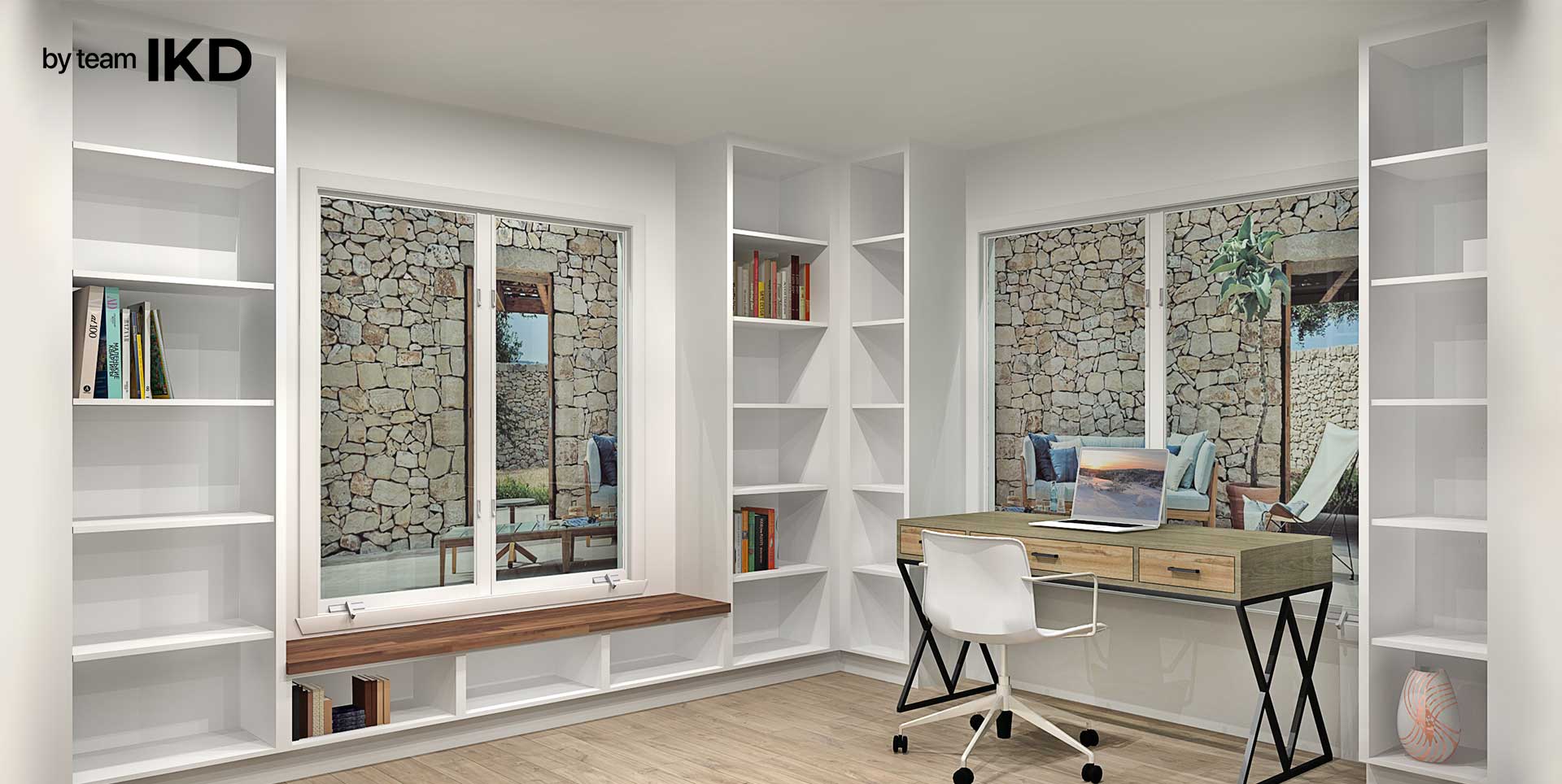
Transforming a Cluttered Storage Space Into a Modern Office Library
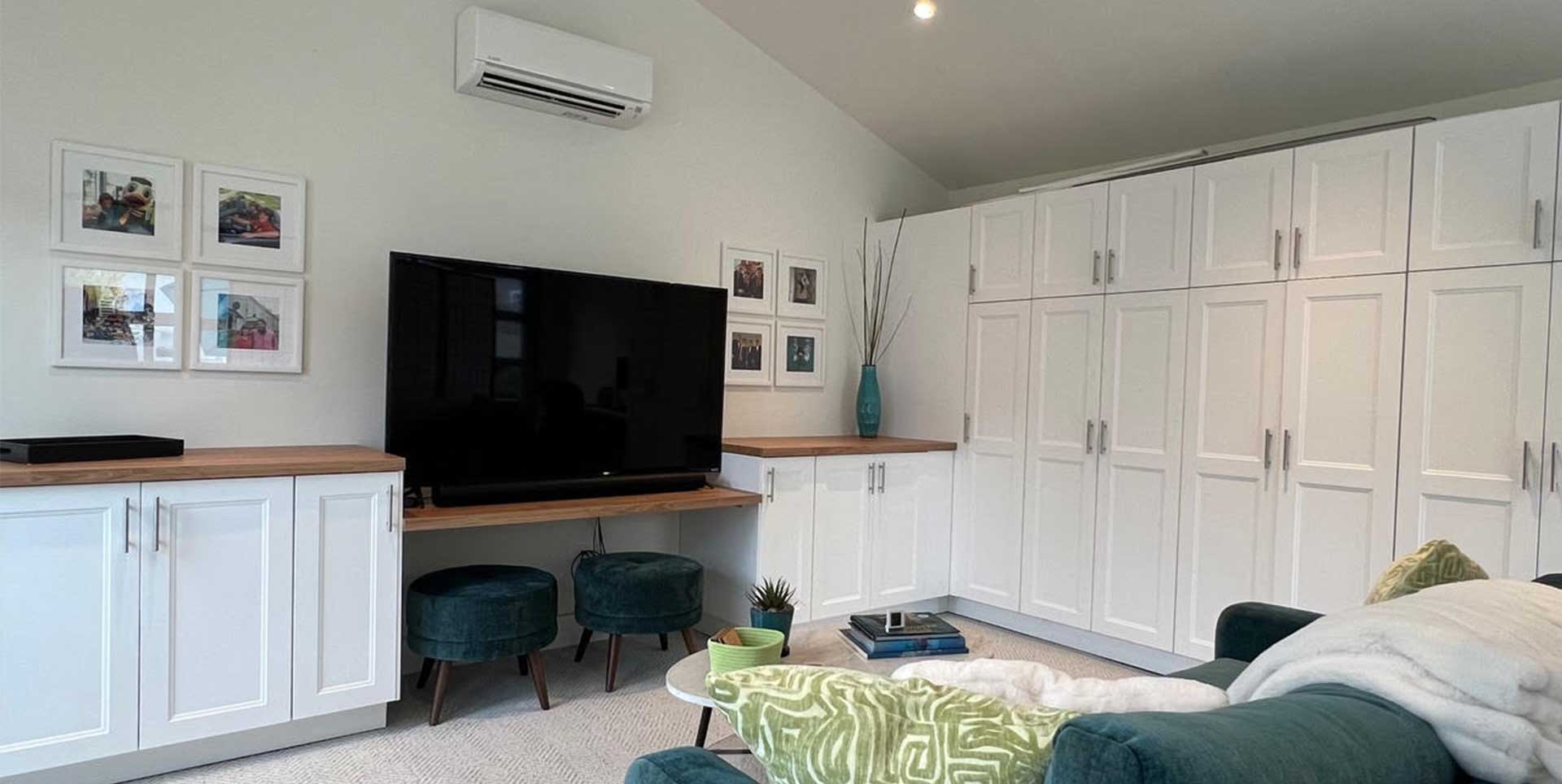
IKEA Laundry Room & Garage Remodel in Burbank, California
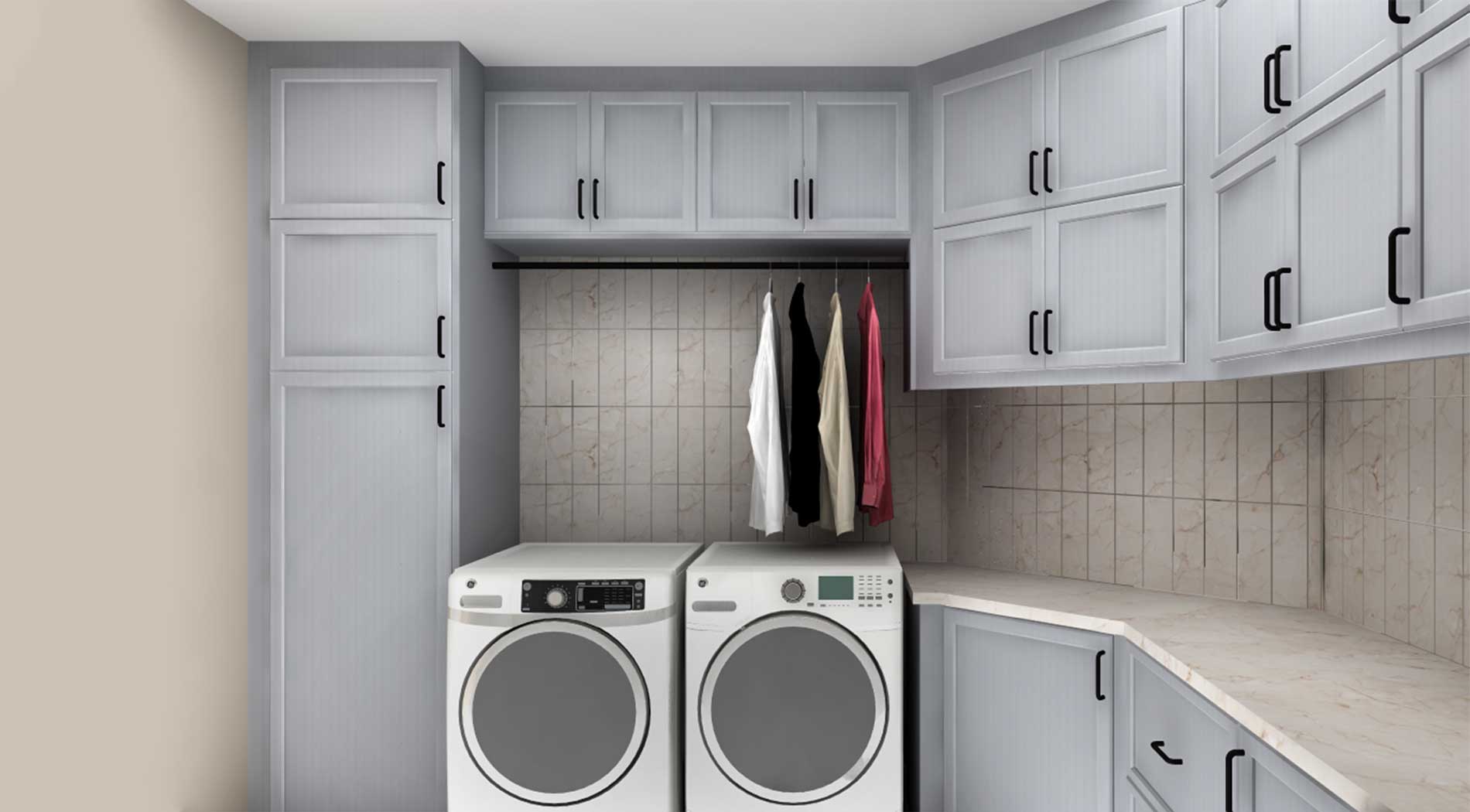
IKEA Laundry Room Uses Customized IKEA Cabinets to Overcome Design Challenges

IKEA Wardrobe & Mudroom Design in Australia | IKD Case Study
This family of five modernized their IKEA kitchen area
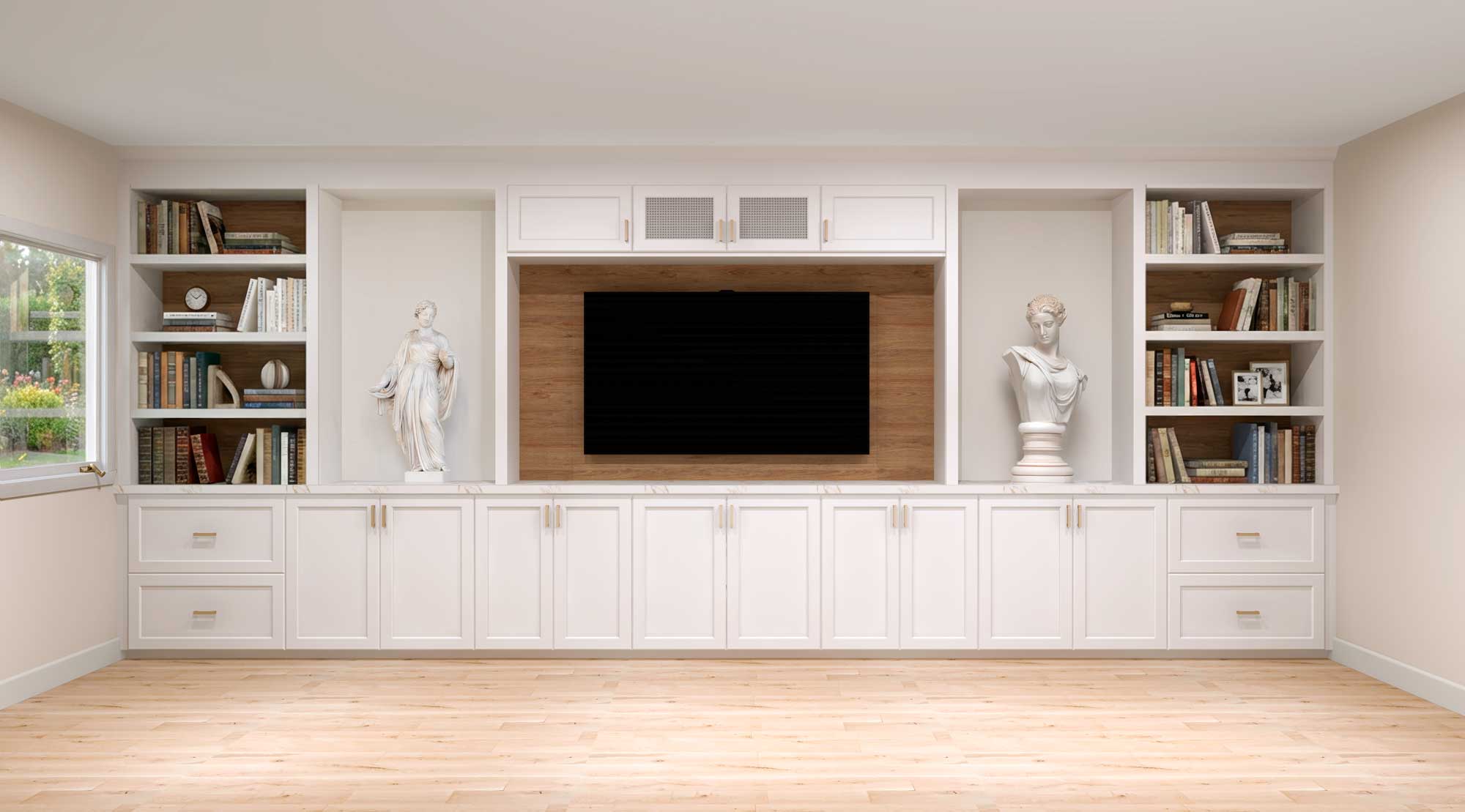
Concealed Comfort: A Custom IKD Media & Bar Design