
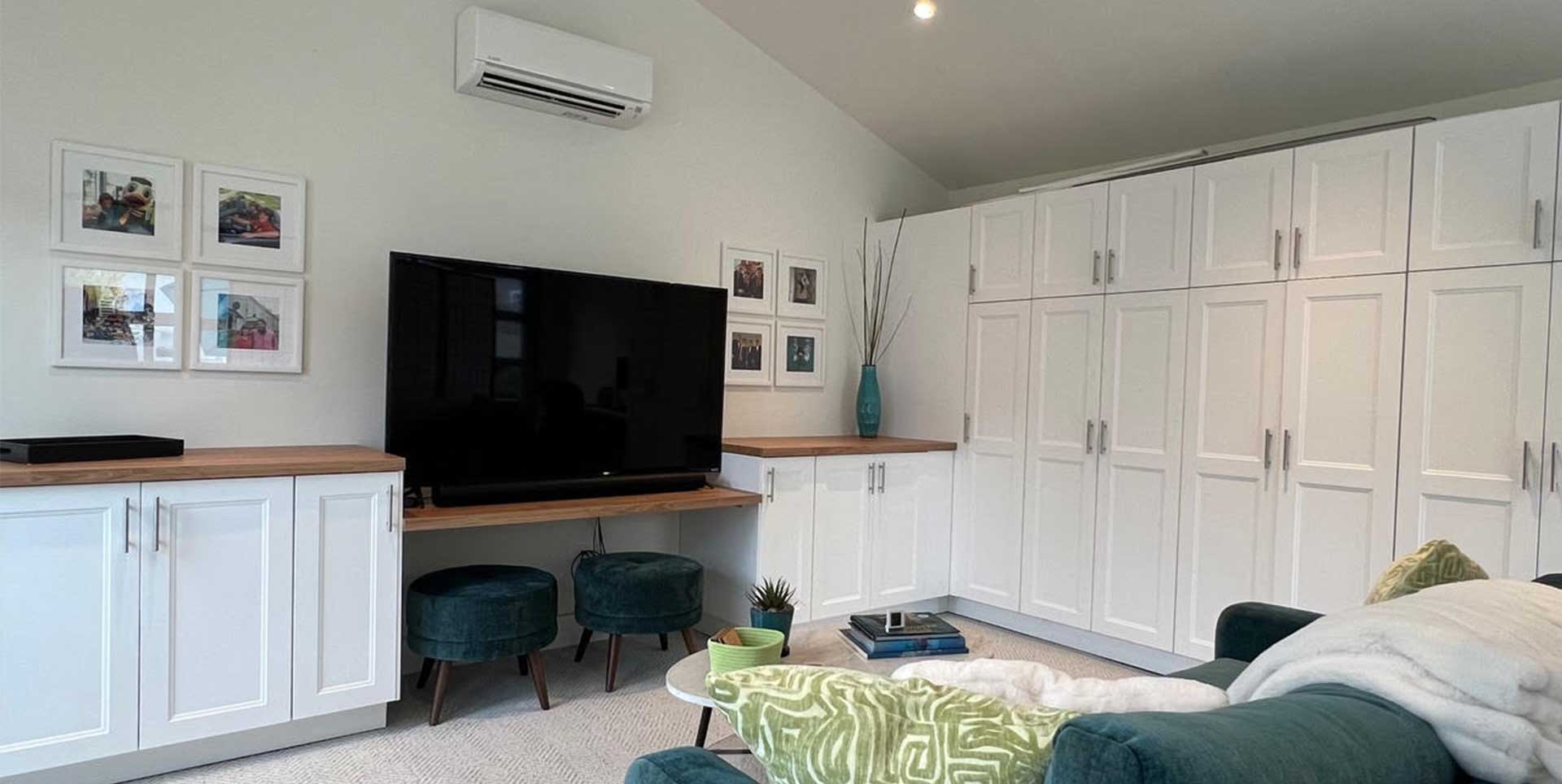
What Does a Real-Life IKEA Laundry Room and Family Space Look Like When It’s Designed to Be Used?
When Pam and her husband moved from Portland to Burbank, California, they knew exactly what they were gaining—and what they were giving up. The weather improved. The house got smaller. The cost of everything went up.
Their Portland home had been fully renovated. In Burbank, the kitchen was already complete, which felt like a small win. The garage, however, told a different story. It held an aging washer and dryer, accumulated dust effortlessly, and offered little reason to linger.
What it did offer was opportunity: over 300 square feet that could become a functional living space instead of a room you rushed through. In Los Angeles, unused square footage isn’t just wasted—it’s expensive.
But converting a garage into a combined laundry room, storage wall, and family space isn’t cosmetic. Once plumbing, electrical clearances, and fixed IKEA cabinet dimensions are involved, mistakes aren’t theoretical. They show up during installation—when changes are hardest to make.
Why IKEA—and Why Design Was the Real Investment?
Pam and her husband had used custom cabinetry before and valued its quality. This project, however, came with strict budget boundaries. They were already replacing windows, doors, and bathrooms throughout the house.
IKEA cabinetry offered the right balance of durability, modularity, and low cost —but only if it was planned correctly. IKEA cabinet sizes don’t flex. Door swings don’t negotiate. And once cabinets are ordered, there’s no room for improvisation.
They initially explored IKEA’s in-store planning tools. Those worked until the scope expanded. Once a sink and countertop were included, IKEA closet systems didn’t work. The space required SEKTION kitchen cabinetry to support plumbing and long-term use.
That’s when Pam’s husband found IKD.
Seeing What Happens After the Plan
What stood out immediately wasn’t style—it was evidence. IKD’s site showed completed projects photographed after installation. Pam reviewed case studies closely, focusing on how complicated layouts actually translated into finished spaces.
Equally important was IKD’s design process.
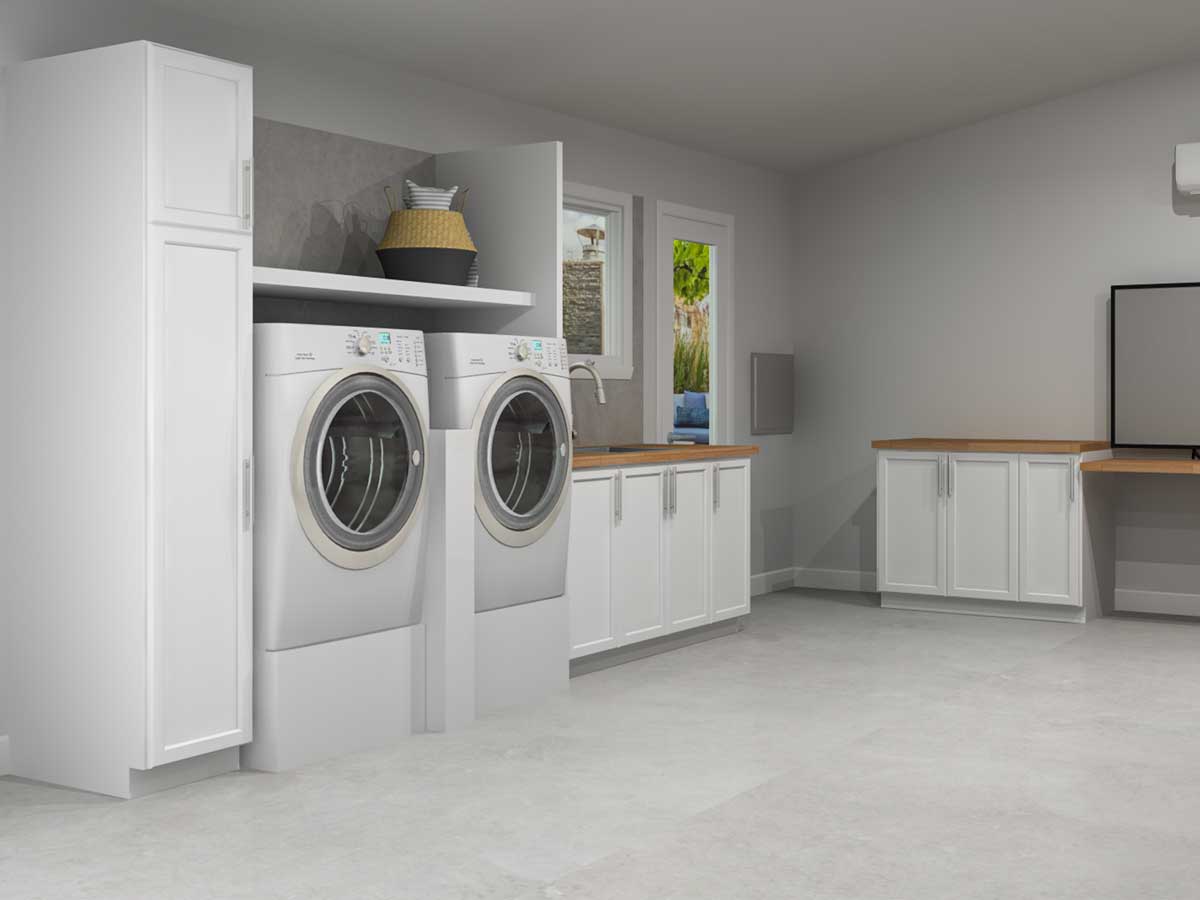
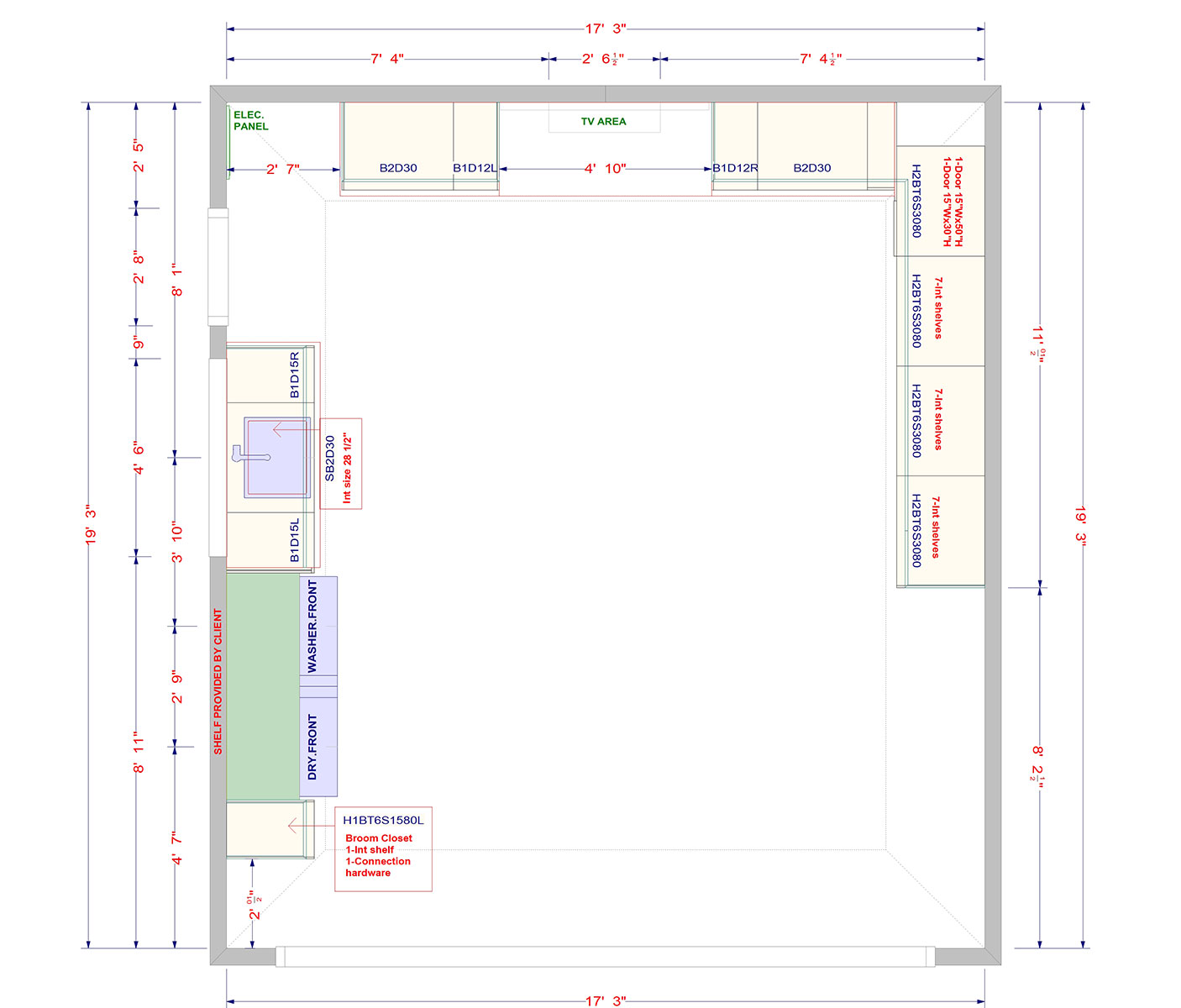
IKD uses professional-grade software to produce measured floor plans, wall-by-wall elevations, and color renderings. Elevations—vertical views of each wall—show cabinet alignment, filler requirements, appliance locations, and clearances that plan views simply don’t reveal.
In this project, elevations flagged a clearance conflict between a cabinet run and the electrical panel, which requires unobstructed access by code. Adjustments were made digitally—before ordering—rather than during installation, when changes are costly.
Once Pam saw the elevations and renderings, the space finally made sense.
How to Design an IKEA Laundry Room Around Architectural Constraints?
This wasn’t a blank room.
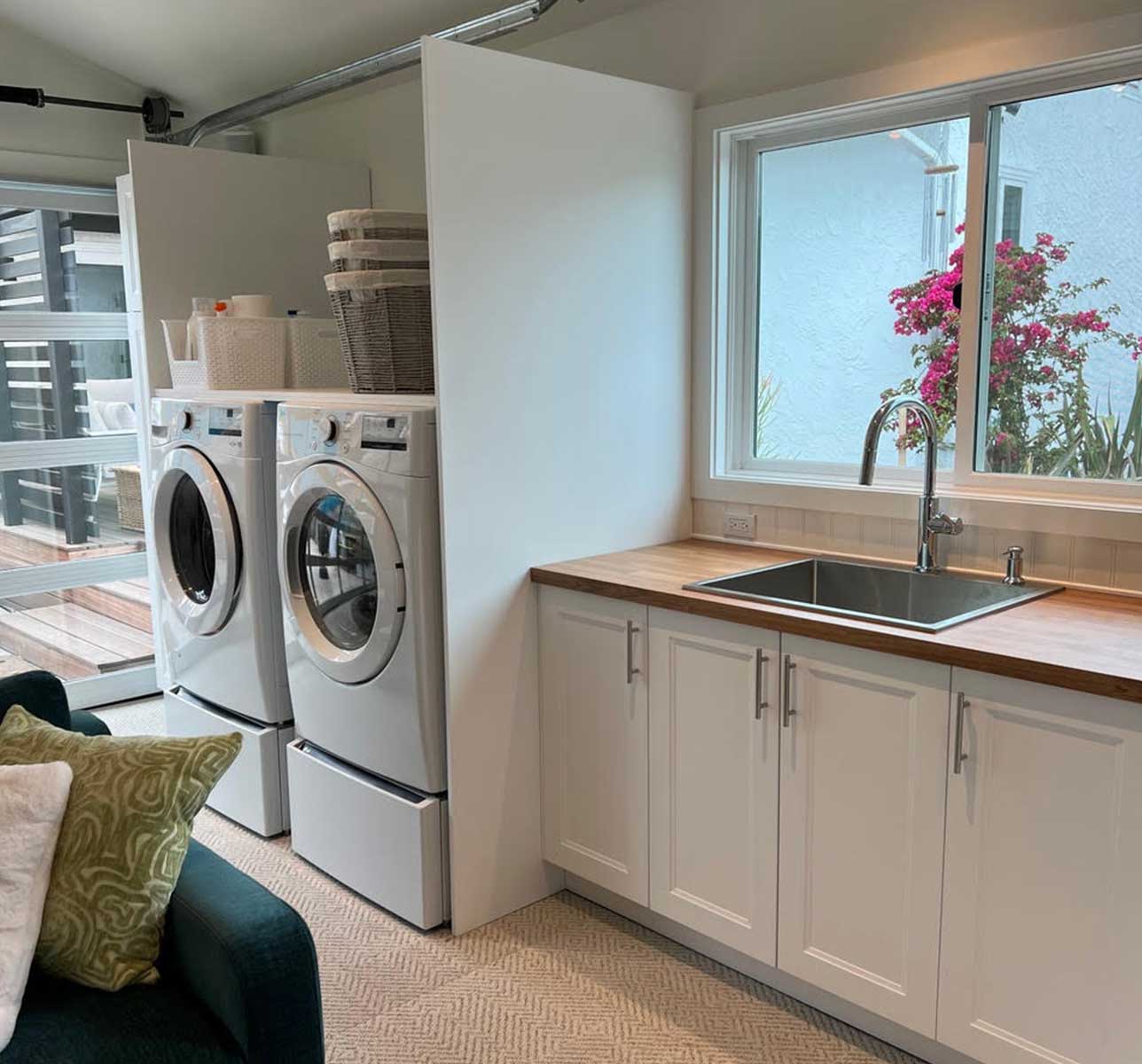
This space wasn’t designed for a single purpose. It needed to operate as a multi-use room, combining laundry, storage, and everyday living functions within one layout. That meant every design decision had to work harder than it would in a standard laundry room—or a standard family room.
Cabinets couldn’t simply maximize storage. They had to respect sightlines to the TV, accommodate daily circulation, and feel appropriate in a space where people actually spend time. At the same time, the room still needed to handle plumbing, appliances, and utility demands.
A wall-mounted HVAC mini-split needed to remain centered above the TV wall. The electrical panel required exact clearance. Door swings had to work without blocking circulation. The TV needed proper backing and symmetry within the cabinetry layout.
IKD refined the design, coordinating the competing needs of a multi-use room:
- 80” high cabinet heights for full-height storage
- Clearances around plumbing and appliances
- Visual balance around the TV wall
- Circulation space so the room functions comfortably as a living area, not just a utility zone
IKD designed a recessed cabinet zone using full-height cover panels and correctly sized fillers. This approach preserved visual symmetry across the wall while keeping all cabinetry within IKEA’s standard sizing.
Sometimes, the most professional decision isn’t finding a clever workaround—it’s designing the space so it doesn’t need one.
More Than a Laundry Room: A Garage Remodel Designed for Daily Life
The finished space is technically a laundry room. In practice, it functions as a family room, TV lounge, home office, utility space, and storage wall—without being any one thing exclusively.
A glass garage door brings in natural light. Automatic lighting keeps the room welcoming even at night. Pam’s husband works there during the day. In the evenings, it’s where they relax and watch TV.
Their dog has also fully adopted the space. Instead of supervising laundry from the doorway, he now joins them for TV time, planted squarely on the floor and facing the screen like he’s following the storyline.
Because the garage is gone, a full-height storage wall now does the heavy lifting—keeping the rest of the house from feeling smaller.
IKEA Laundry Room Design Details and Specifications
Because this room needed to function as both a utility zone and a living space, proportions, durability, and alignment mattered more than decorative extras.
Design Specifications:
- Door Style: AXSTAD
- Cabinet System: SEKTION
Sink & Fixtures:
- Sink: VRESJÖN stainless steel
- Faucet: ÄLMAREN
Countertops:
- SÄLJAN laminate, oak effect
Project Costs and Value Context
- IKEA Cabinetry & Fixtures: $4,614.00
- Cover Panels, Rails, Toe Kicks, Hardware: $2,522.99
- Total IKEA + Extras: $7,136.99
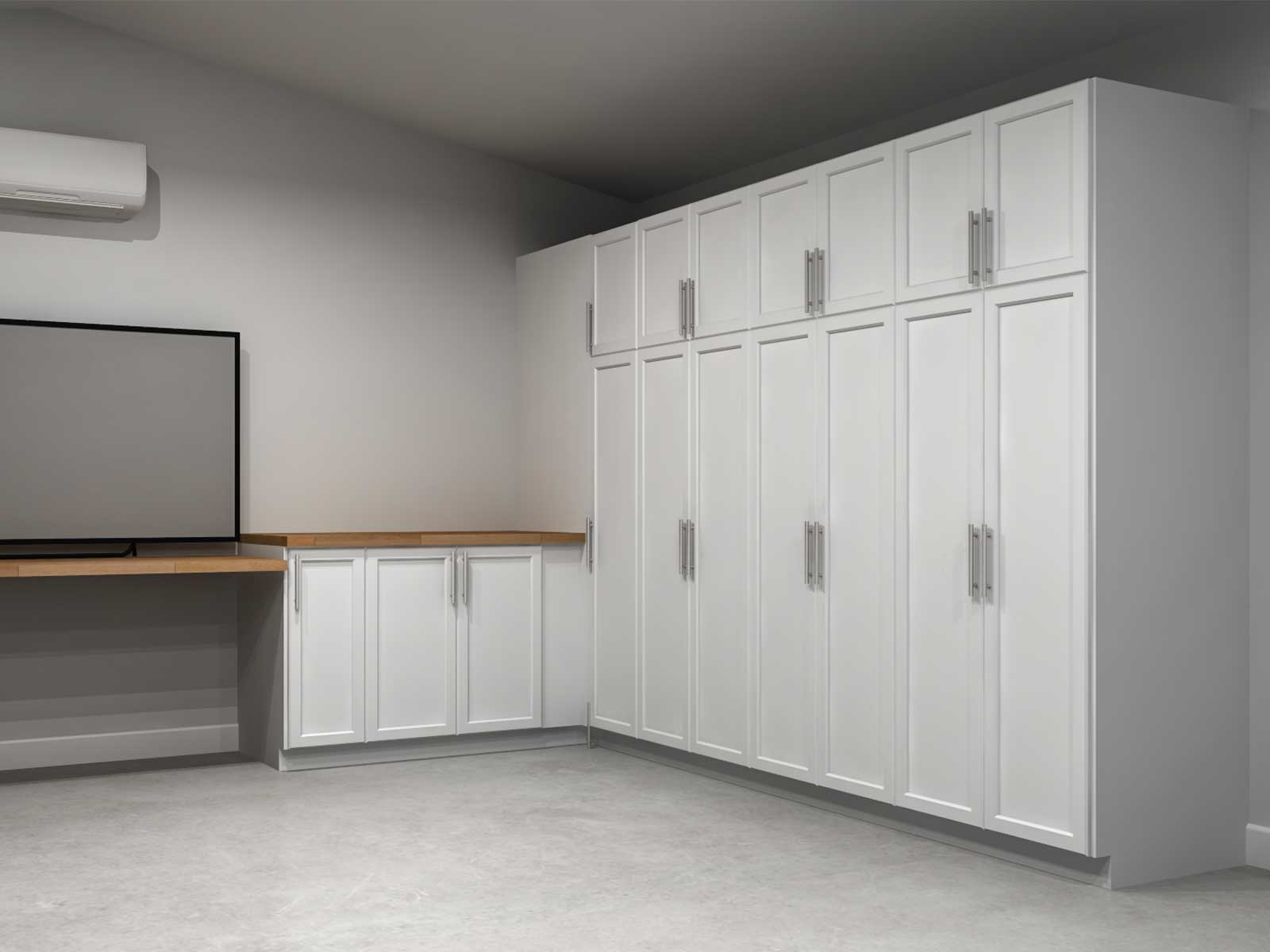
For a space that replaces a garage, adds a family room, integrates laundry, and provides full-height storage, the value was clear. Comparable custom cabinetry for a room of this size and complexity would have cost significantly more—without offering additional functional benefit.
The value wasn’t just in the cabinetry—it was in making a single room perform multiple roles.
Installation: Hard Work, Predictable Results
Pam and her husband assembled and installed the cabinetry themselves. It involved careful sequencing, heavy lifting, and discovering exactly how tall 80” cabinets feel once they’re upright.
Most importantly, the design worked. Clearances aligned. Measurements OK. No cabinets needed to be reordered—nothing required redesign mid-install.
That’s the difference between designing something that looks good on screen—and designing something that installs cleanly.
A Space That Gets Better With Use
What Pam appreciates most isn’t a specific cabinet or finish. It’s how naturally the room fits into daily life. It’s bright.
It doesn’t feel like a converted garage.
Designed to Build
This project demonstrates how professional IKEA cabinetry design enables complex spaces—such as garage remodels with laundry, storage, and living functions—to function seamlessly from the outset.
When IKEA cabinetry is planned with accurate elevations, realistic constraints, and real installation knowledge, the finished space doesn’t need explaining.
At IKD, we design IKEA cabinetry for real homes, real conditions, and real life—so spaces are ready from day one, not like something that still needs figuring out later.
Get a Professional IKEA Laundry Room Design – All Online
Work with our certified designers to get a personalized laundry room designed around your needs and vision. If you’re interested in learning more about our service, make sure to check out our IKEA Laundry Room Design Services.





IKD Past Projects
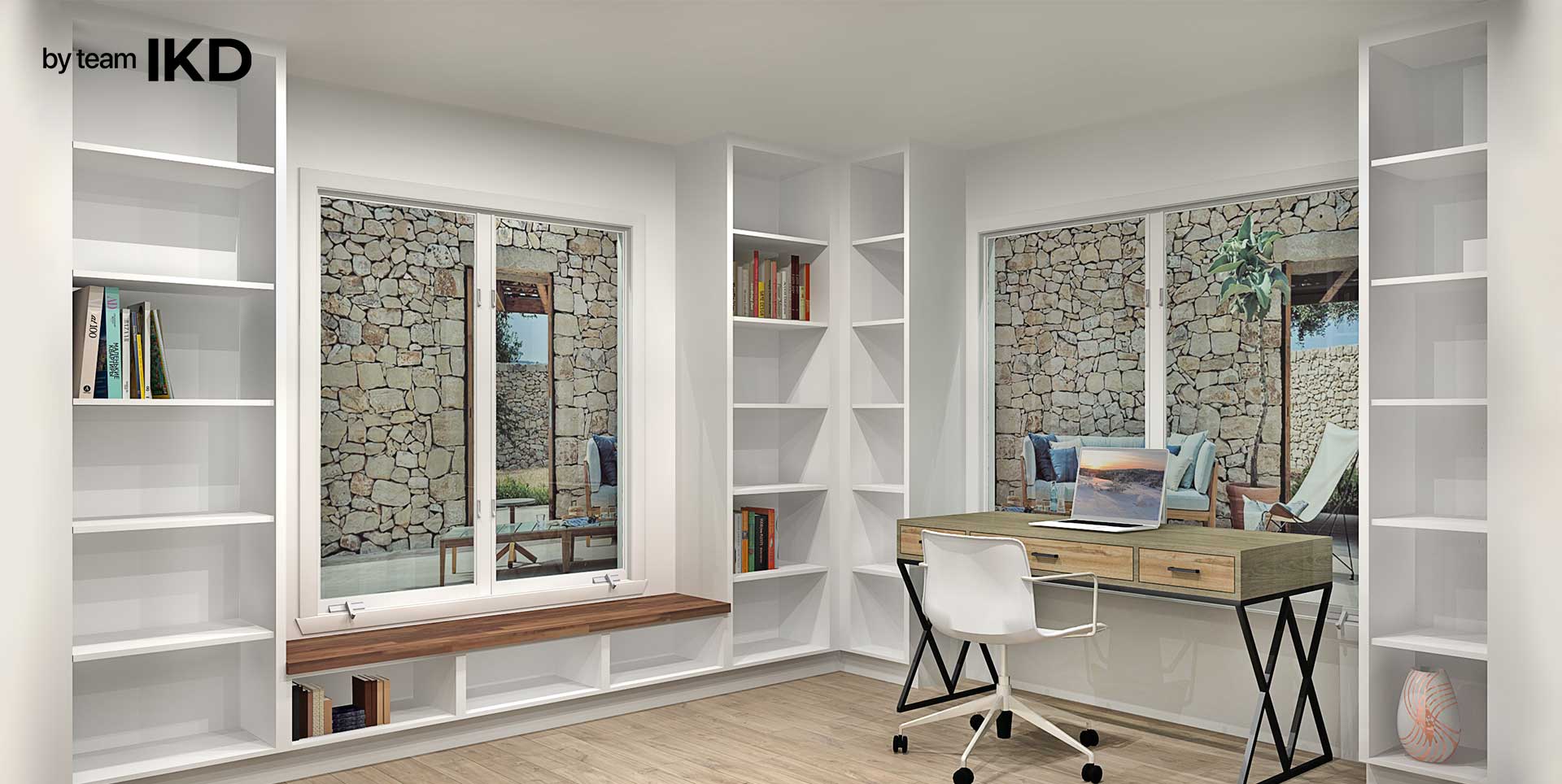
Transforming a Cluttered Storage Space Into a Modern Office Library
IKEA Laundry Room & Garage Remodel in Burbank, California
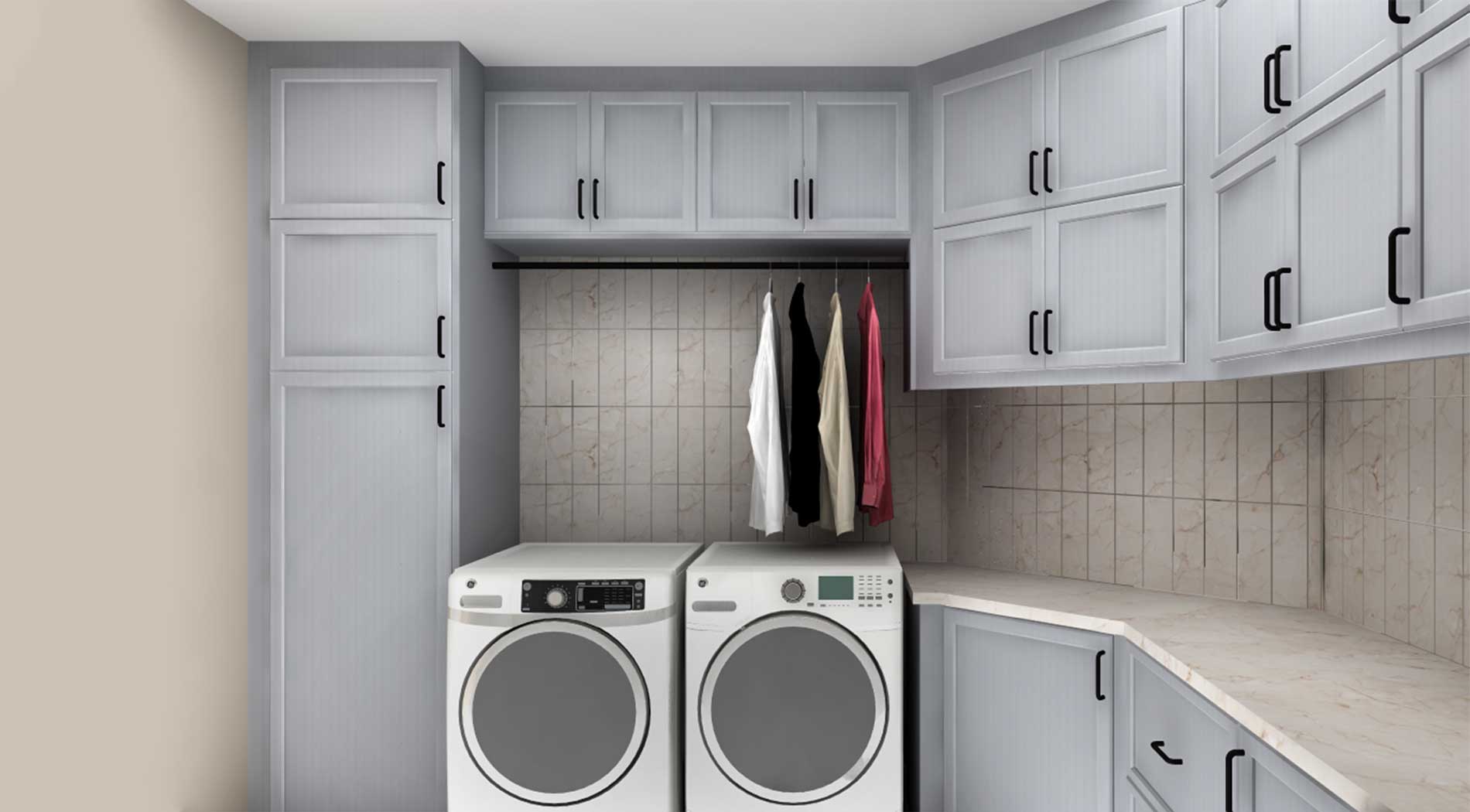
IKEA Laundry Room Uses Customized IKEA Cabinets to Overcome Design Challenges

IKEA Wardrobe & Mudroom Design in Australia | IKD Case Study

This family of five modernized their IKEA kitchen area
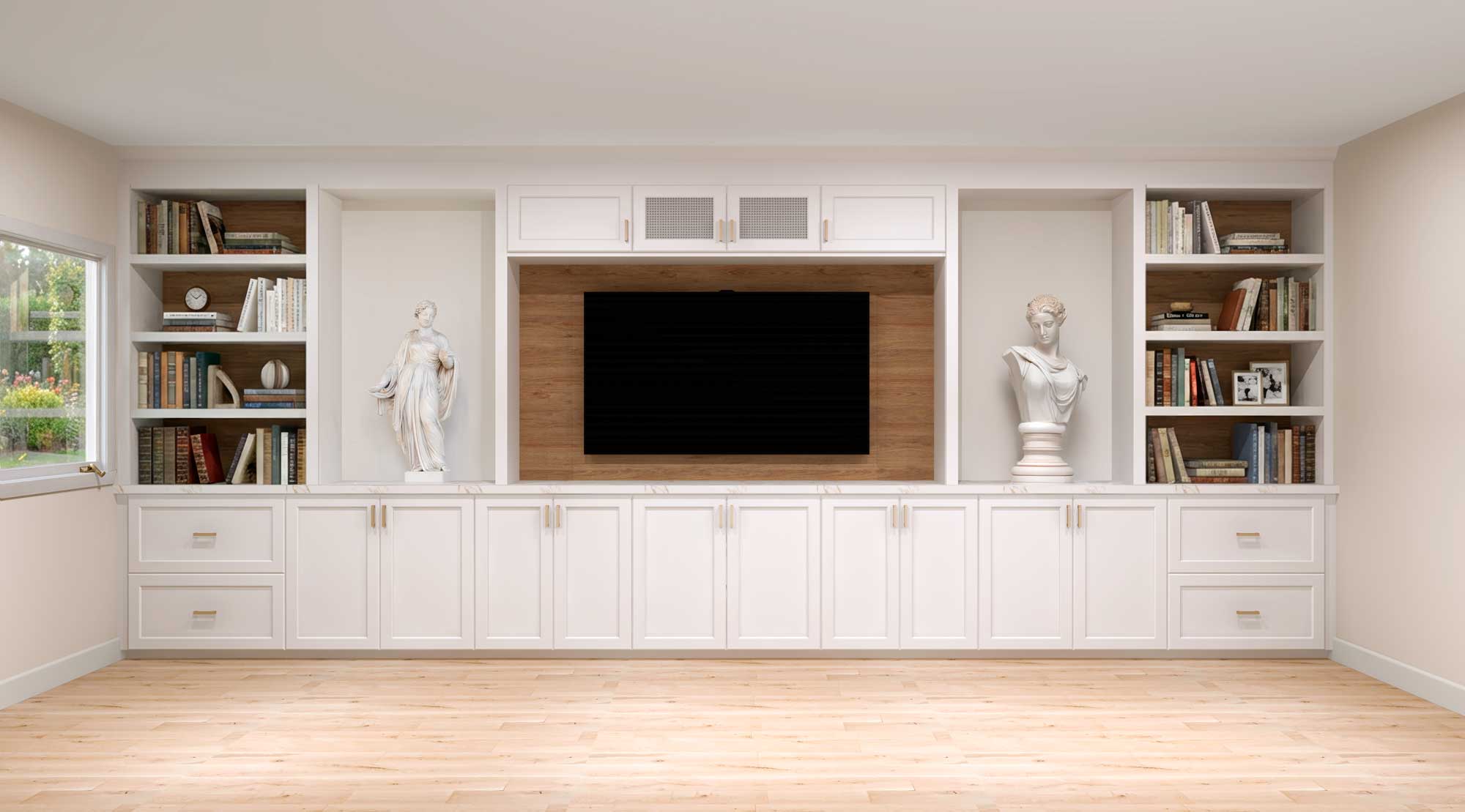
Concealed Comfort: A Custom IKD Media & Bar Design